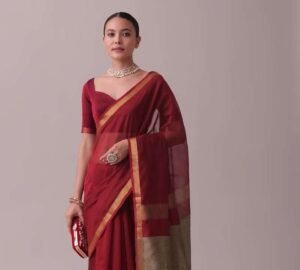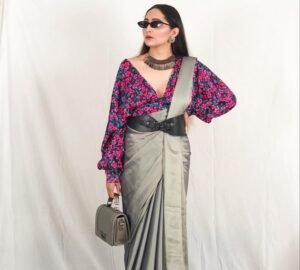
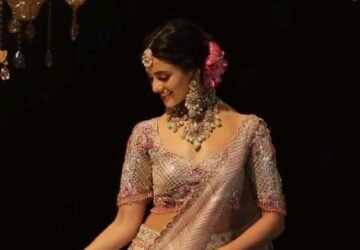
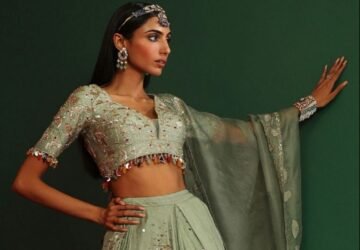




Rooted in culture, elegance, and a fierce sense of identity, the Traditional Bengali Saree Drape is more than just a way of wearing a garment — it’s a visual homage to heritage. This draping style, often worn during Durga Puja or Bengali weddings, is instantly recognizable for its dramatic, regal structure and graceful flow.
In this look, the saree features a classic white base with red and golden borders, which is symbolic in Bengali tradition — white for purity and red for strength, passion, and auspiciousness. The saree is typically handwoven cotton or linen, making it breathable and ideal for the humid Eastern climate while exuding understated sophistication.
The drape is unique and distinct from other regional styles. The saree is wrapped around the waist once, and the pallu is brought from the back to the front over the right shoulder instead of the left, which is the usual in most drapes. The free end of the pallu can be either left flowing or tucked into the left waist after being wrapped around the body once more — which adds an elegant layer to the movement and presence.
A key aspect of this style is the blouse styling and accessorization. The blouse here is sleeveless with delicate tie-up details, modernizing the traditional silhouette while maintaining its authenticity. The accessories are bold yet graceful — statement jhumkas, a bright red bindi, and subtle gold-toned jewelry accentuate the ethnic essence.
This drape is particularly special during festivals, rituals, and traditional events, and is often seen worn by women dancing during Durga Puja or performing rituals with poise and pride.
Style Tip: Pair this drape with traditional mogra (jasmine) in your hair, a sleek bun, and kohl-lined eyes to channel the full Bengali goddess vibe. Don’t forget the bold red bindi — it’s the crown jewel of this iconic look.
This draping is not just a style — it’s a statement. A timeless celebration of cultural pride, feminine strength, and unfiltered beauty.